Menu
Close



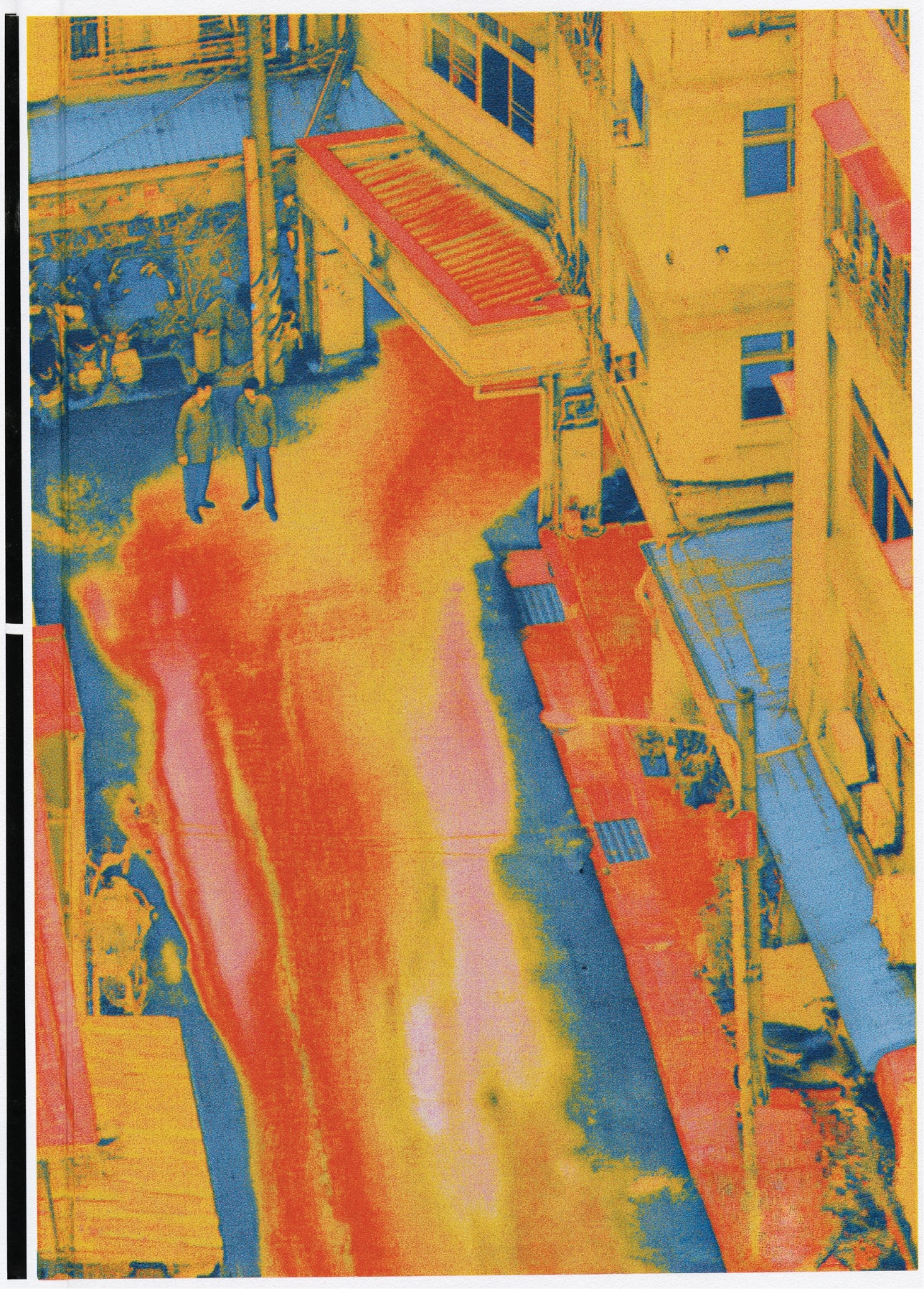
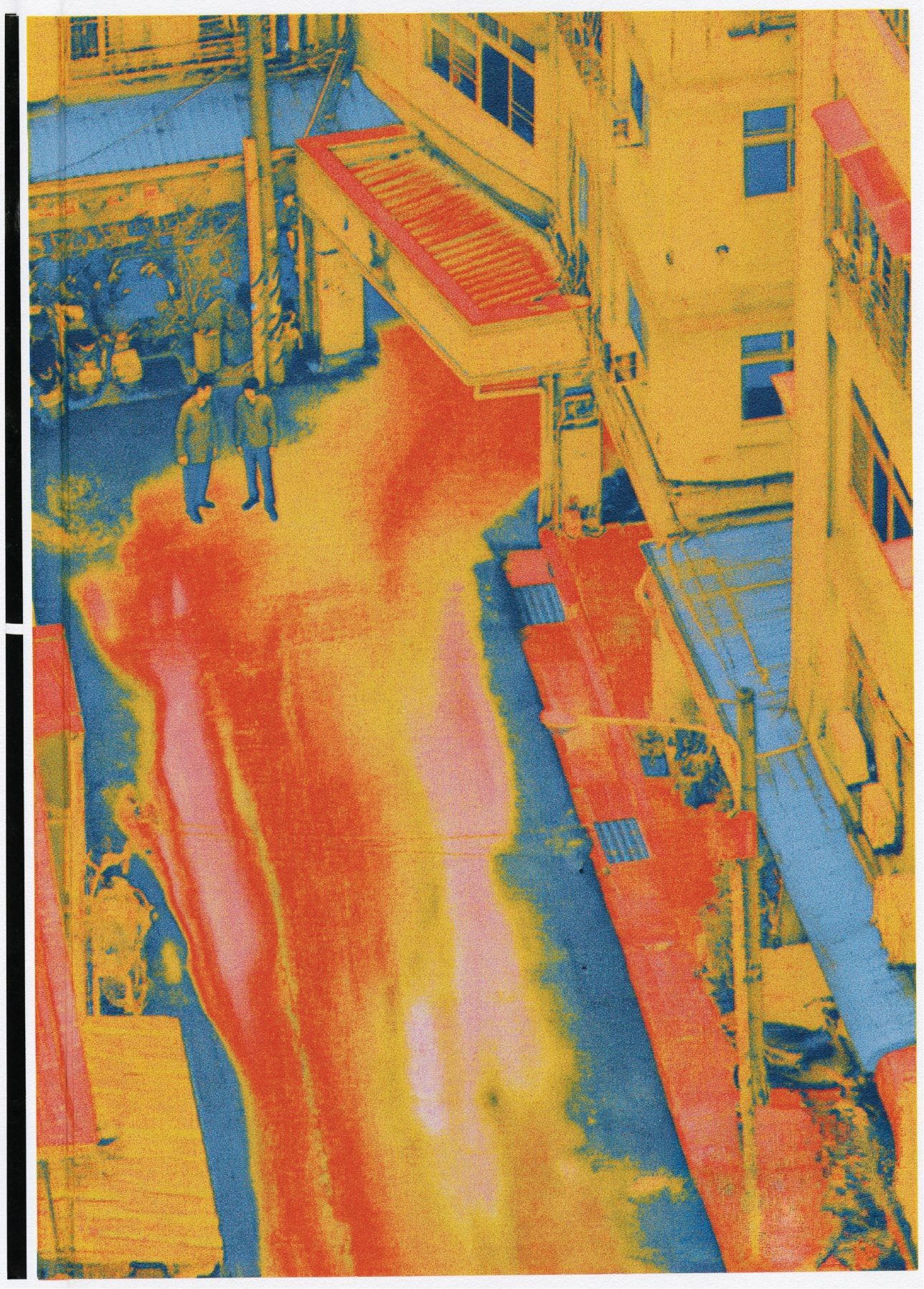
On the day of Small Heat, a sensor embedded in the asphalt reads sixty-one degrees Celsius. The figure comes from a municipal heat-island study conducted a decade ago: recorded at half past noon on a surface of asphalt concrete, roughly five percent bitumen by weight. Because of its dark tone and coarse grain, asphalt absorbs thirty to forty percent more solar radiation than ordinary ground—a matter of pure physics, indifferent to sentiment. Yet it relinquishes heat far more slowly than it drinks it in. What the street swallows under the midday glare does not subside toward air temperature until two or three in the morning. Asphalt remembers the day longer than people do.
The shadow of the utility pole is at its shortest this month. At high noon, it clings flat against the concrete column, nearly erased.
A week before the typhoon that year, the corrugated tin awning over the arcade ticked faintly under the sun, like someone treading lightly across a tin roof in the distance. No one paused to listen. Two men stood at the mouth of the alley, their shadows driven back tightly around their shoes, neither speaking first, each waiting for the other to make a move.
Great Heat approaches, marking the annual peak of solar radiation across the island. A tin roof can easily run twenty degrees hotter than the ambient air—which is the actual, physical reason early shophouses extended tin awnings over their facades: never for ornament, simply to hold those extra twenty degrees above the roofline so the people beneath could breathe a little easier. At this temperature, the orange-red paint on an old signboard softens slightly, its pigment reading deeper and more saturated. That isn't a camera filter; it is matter responding to heat.
Start of Autumn arrives quietly. The heat does not relent, yet the sun's altitude has already begun its southward drift—less than half a degree a day, imperceptible to the naked eye, though the pavement keeps an honest measure. The shadows beneath the two men at the alley's mouth stretch a fraction longer than they did at Small Heat.
By End of Heat, the swelter retreats, though never cleanly—like a palm still closed around a piece of iron that refuses to cool. Night after night, the asphalt continues exhaling the heat hoarded during the day, only finishing a little earlier now, because the sun no longer hands it enough to replenish the loss.
Down that alley, the sun-bleached signboard remains where it has always hung, its crimson faded nearly to tangerine, its tin corners curling inward. No one has come to take it down.