Menu
Close



On the day of White Dew, silvergrass suspends water at the very tips of its down. Each plume is a cluster of hundreds of spikelets, each base tufted with white hairs less than 0.05 millimeters thick and filmed in wax; water beads where filament crosses filament, holding fast without slipping. Overnight radiative cooling drops the leaf surface a degree or two below the ambient air, coaxing vapor into dew. Once the sun rises, the moisture evaporates—every gram of water lifting 2,400 joules of heat as it departs. On the morning the dew dries, the air beneath the grass sits a full four degrees cooler than the asphalt three meters away.
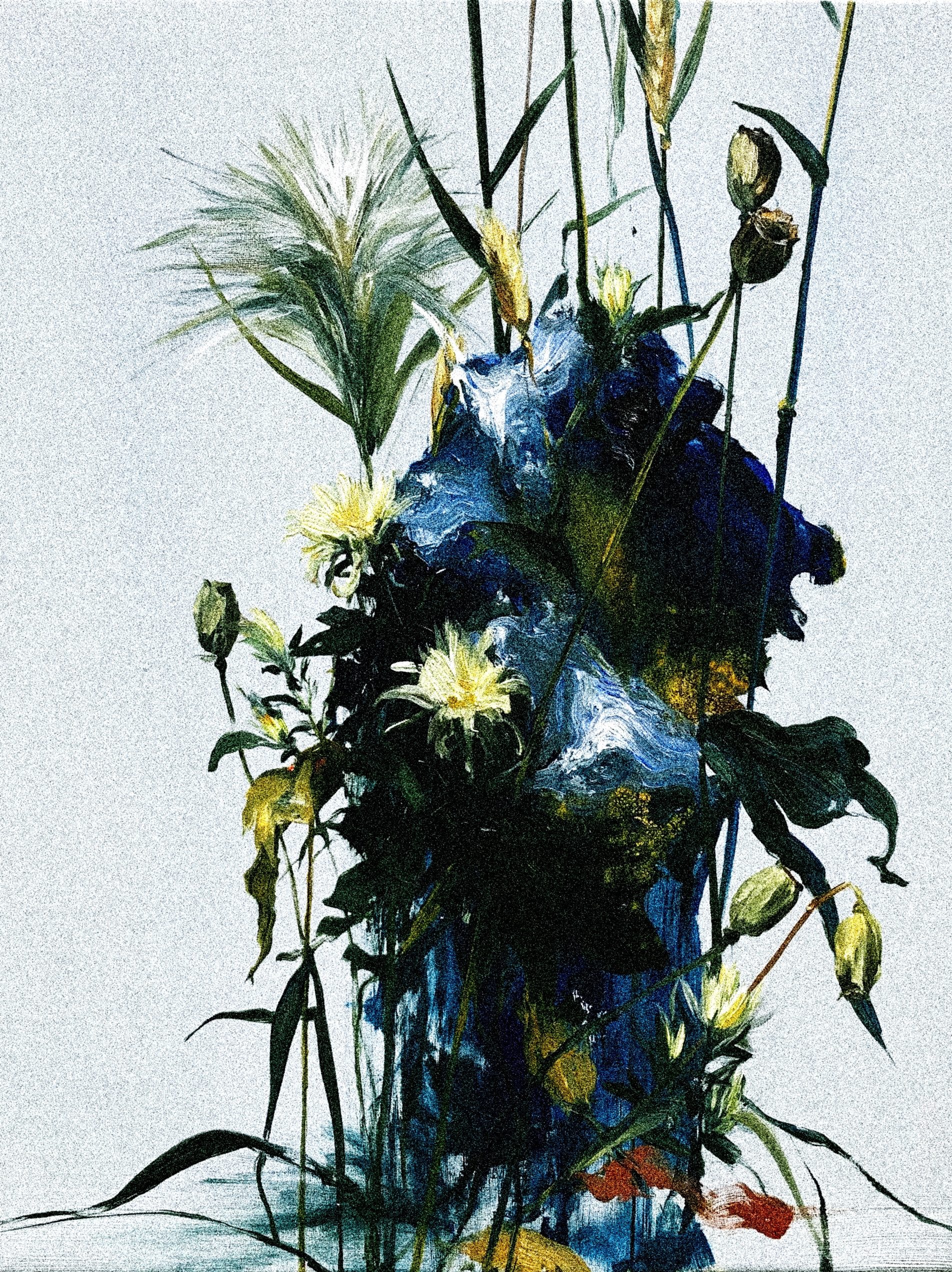
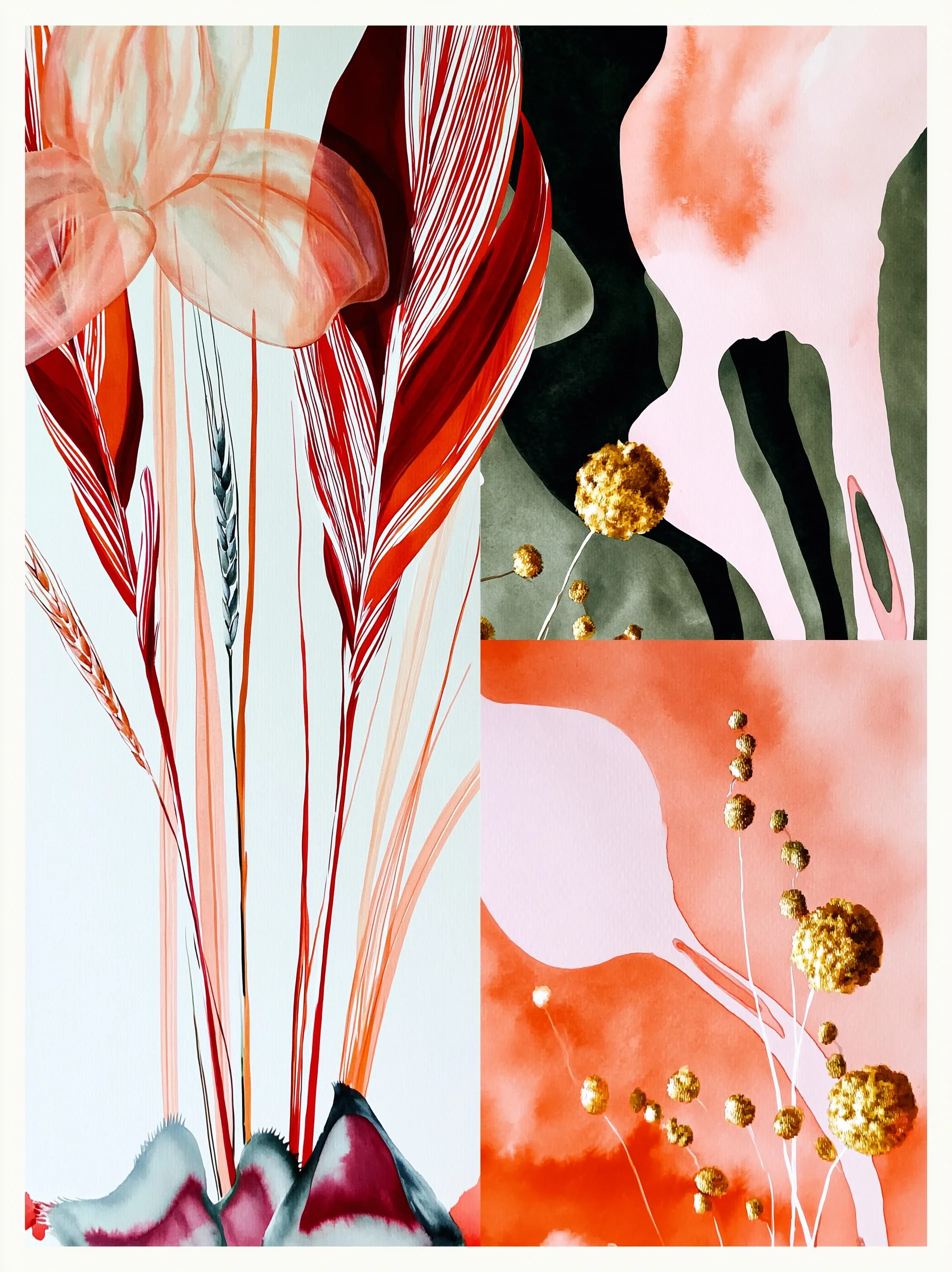
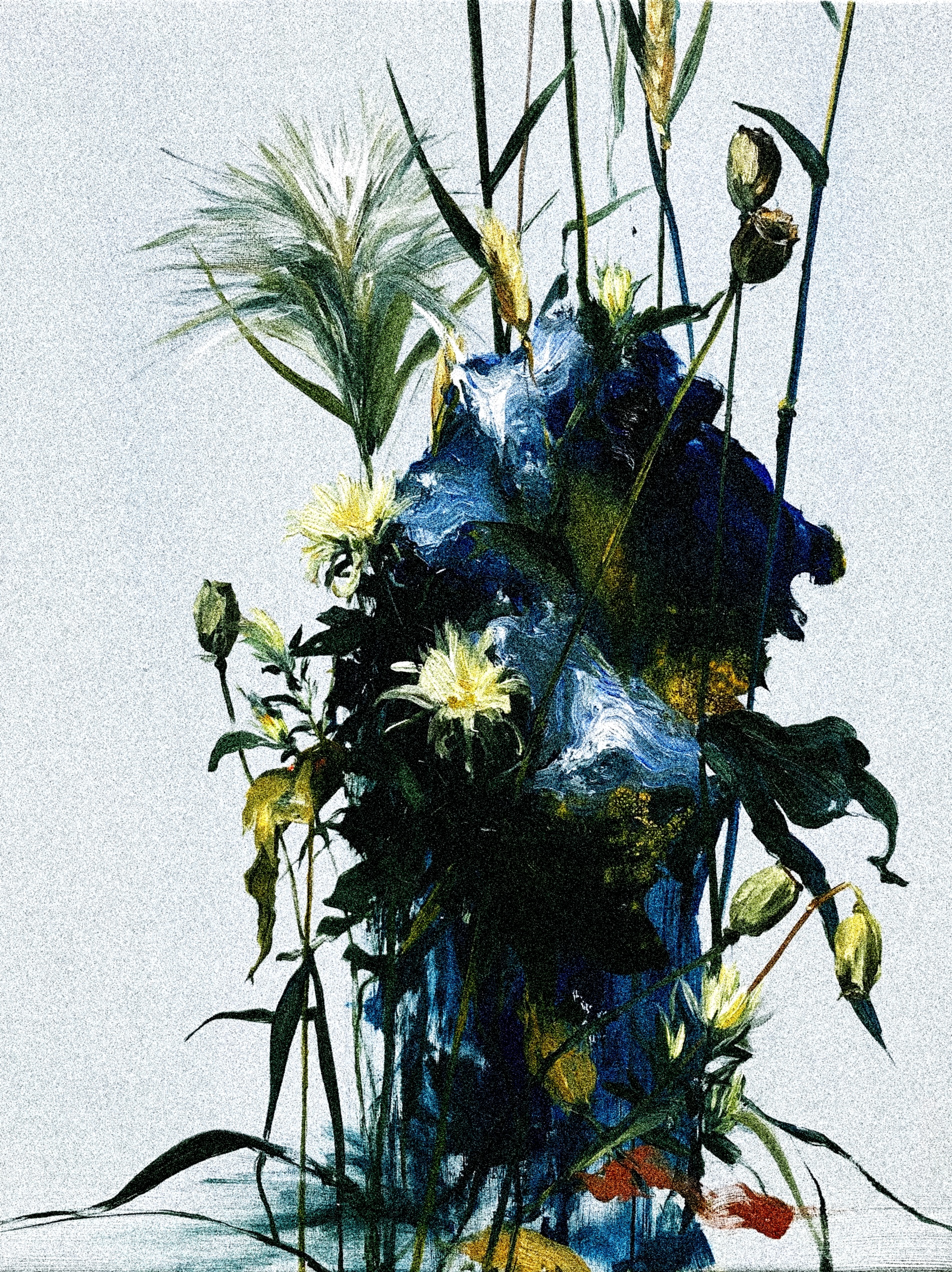
The green in the frame splits into two distinct strata. Above: new blades, water-full, edges taut. Below: a moss-dark green laid on thick, obscuring the junctions where the stems cross.
That autumn, a wide-mouthed glass jar sat on the living room table, holding silvergrass bought at the far end of the market, a few chrysanthemums, and two branches still bearing seed pods. The water level fell two centimeters a day—half drawn up by the stems, half surrendered to the air. Each morning, someone refilled it to three fingers below the collar of the jar. Always the exact same mark, never once measured.
At the Autumn Equinox, the sun stands directly over the equator. Textbooks claim day and night are equal, yet in Taipei daylight outlasts darkness by roughly nine minutes—atmospheric refraction lifts the sun's image half a degree before it clears the horizon and holds it there after it sinks, while astronomical sunrise is clocked from the upper rim of the solar disc. True parity arrives three days later. At twenty-five degrees north latitude, the noon sun sits at sixty-five degrees, casting a shadow precisely 0.47 times the height of the pole.
During these weeks, the awns harden. An awn is a slender bristle extending from the glume, lined with microscopic barbs angled toward the tip; once fallen to earth, shifting humidity flexes the bristle, driving the seed millimeter by millimeter into the soil. The architecture is built for sowing, not defense. Meanwhile, the seed pods swell, their outer husks still green, a narrow pocket of air left between shell and kernel that rattles softly when shaken.
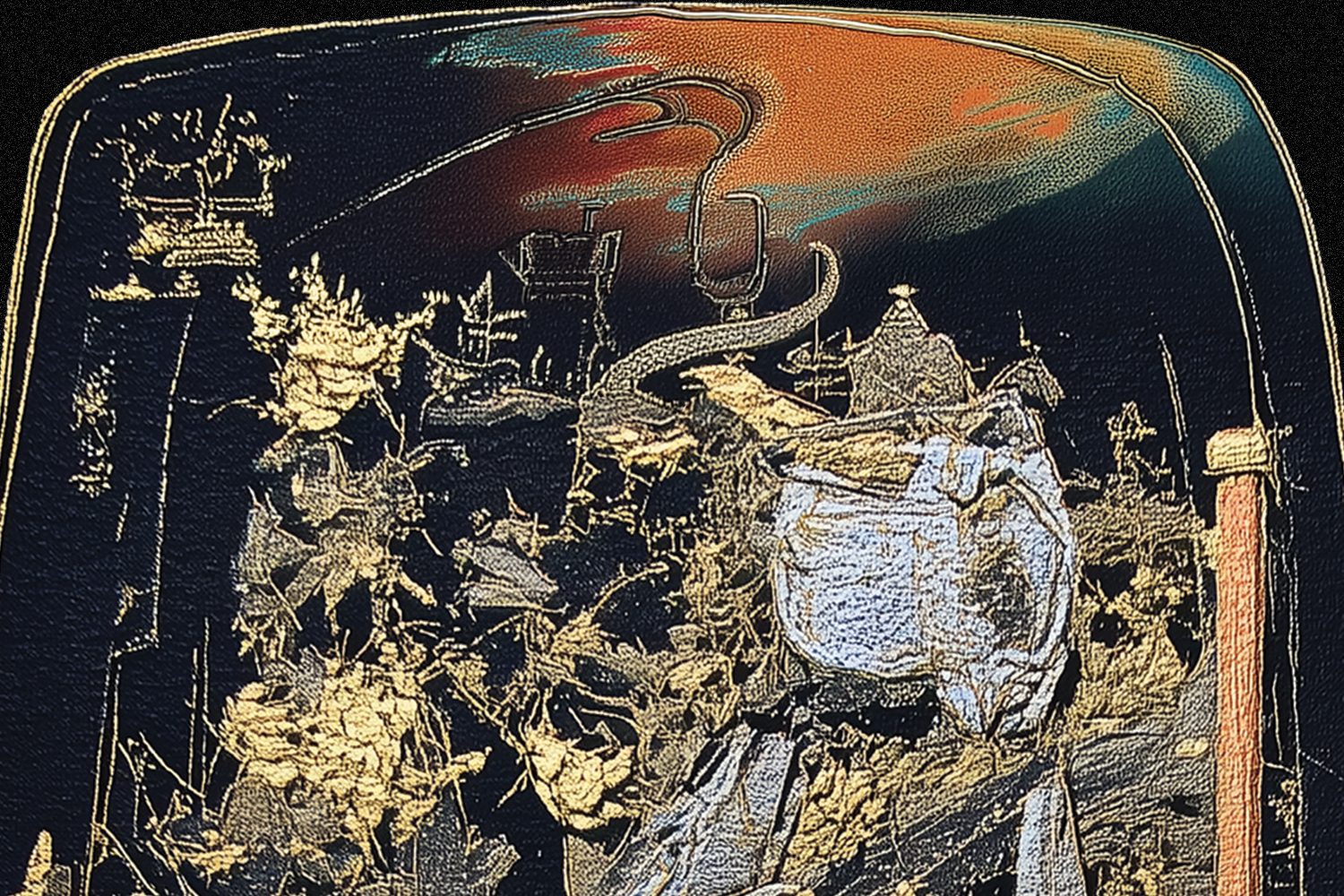
Blue presses down from the top of the composition. Not the blue of sky, but cobalt pigment dried into the grain of the paper, masking a section of stem while letting the underlying green bleed faintly through.
Around Cold Dew, the first wave of the northeast monsoon reaches northern Taiwan, carrying sea moisture that turns the nights damp and chill. The dew nears the freezing point without crossing it. Chrysanthemums choose this exact window to bloom: sugar concentrations rise within the cell sap of their petals, depressing their freezing point to one or two degrees below zero—the quiet threshold required for them to unfold here. A plant does not fight the cold; it alters the physics of the liquid inside itself.
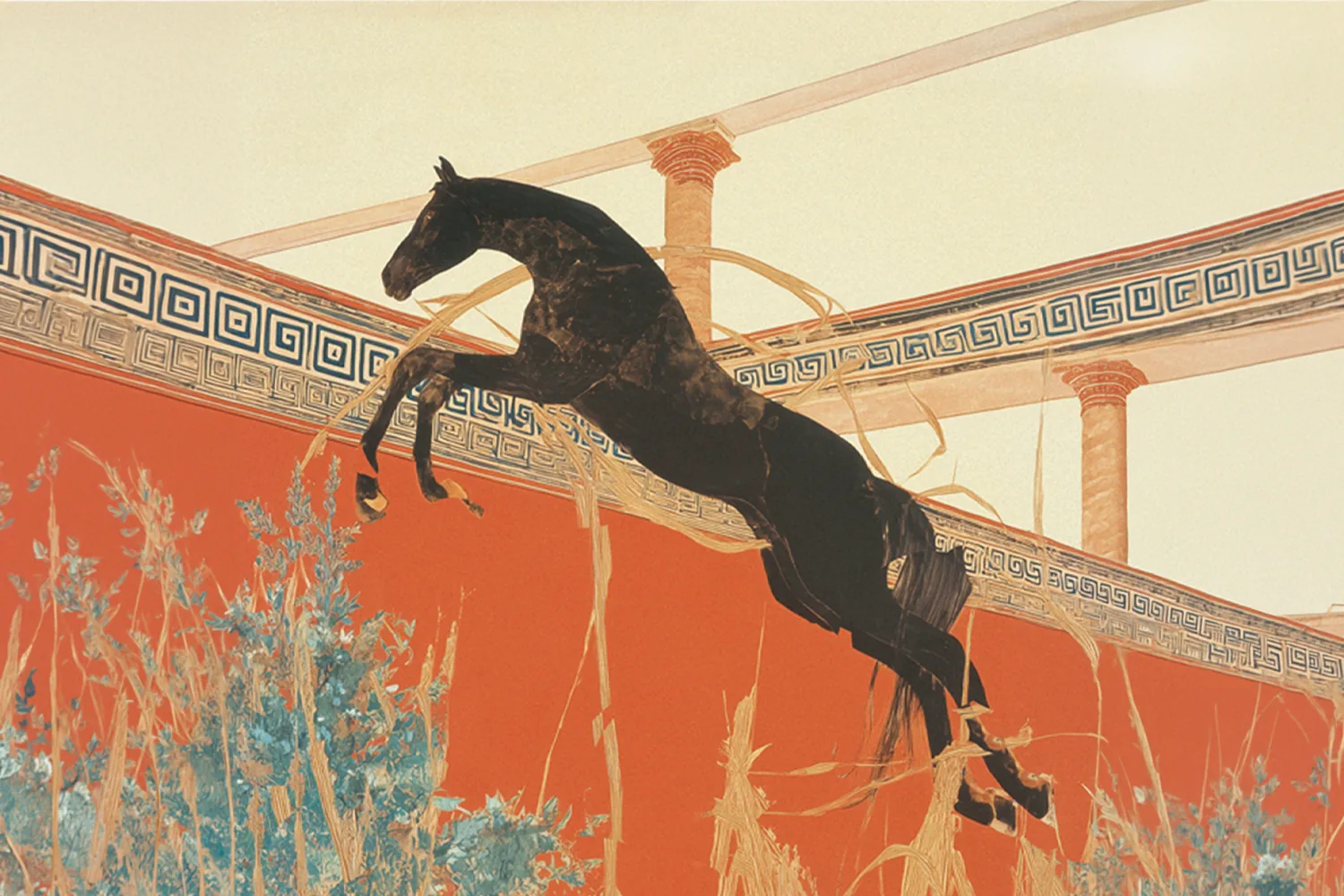
Yellow emerges—low in saturation, close to dry straw. The outer ray florets of the chrysanthemum curl back one by one, while the central disc florets remain tightly closed.
Frost's Descent. Frost is not frozen dew: when water vapor meets a surface below zero, it bypasses the liquid phase entirely and crystallizes directly into ice—a process called deposition, lining the serrated margins of a leaf overnight. Yet no frost settles on the Taipei basin. The urban heat island holds the city two to three degrees warmer than the countryside, pushing Taiwan's first-frost line above a thousand meters in elevation. In this room, the name of the season is merely a passing guest.
Loose plumes of silvergrass drift onto the tabletop—brushed away once, there again the next morning. Chrysanthemum petals draw inward as they dry to brown; the green of the seed pods fades into ash grey.
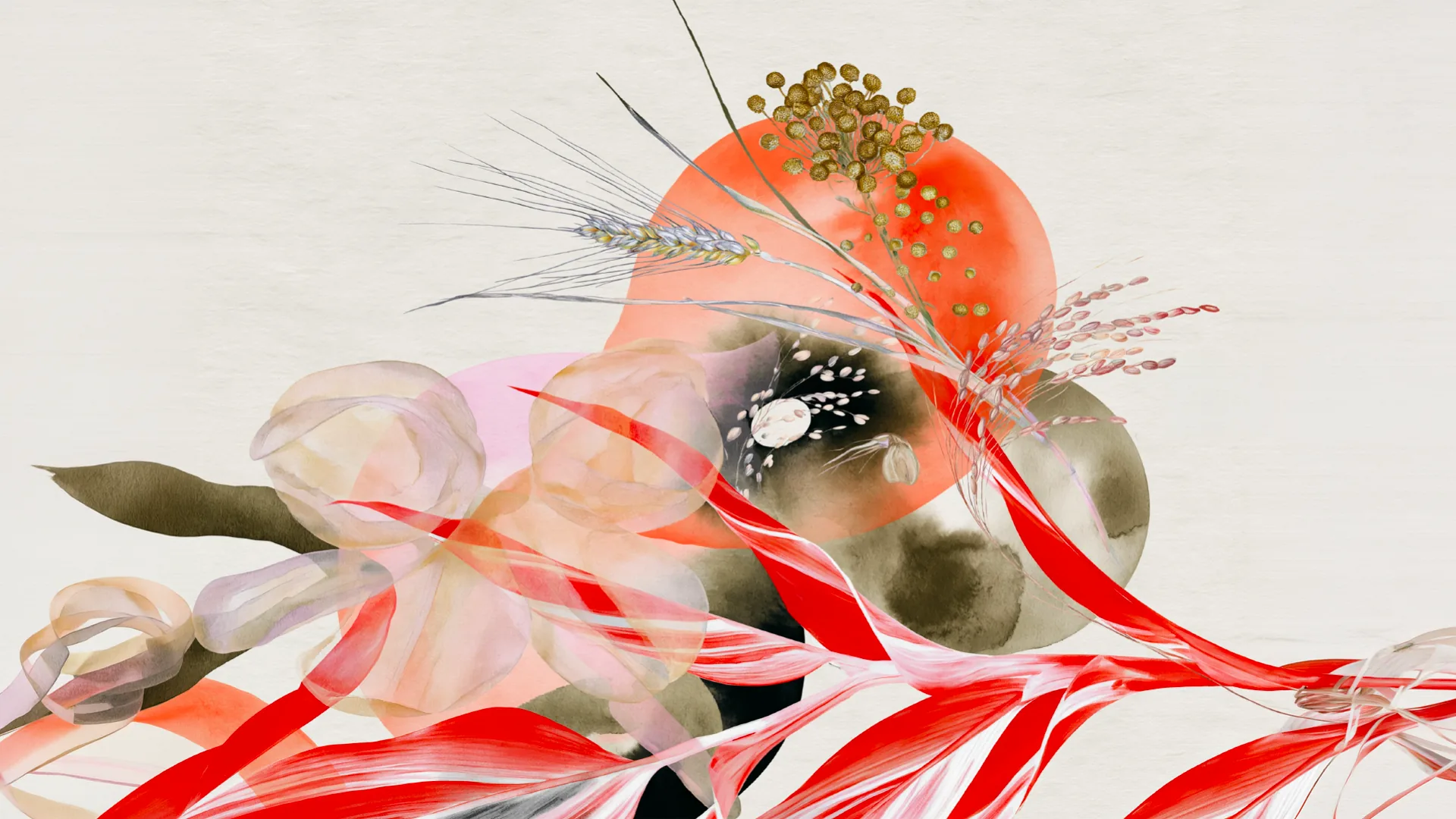
The streak of vermilion at the base of the glass jar is lacquer spilled last year. It will not wash off. In the morning, someone walks over and fills the water to three fingers below the neck.