Menu
Close



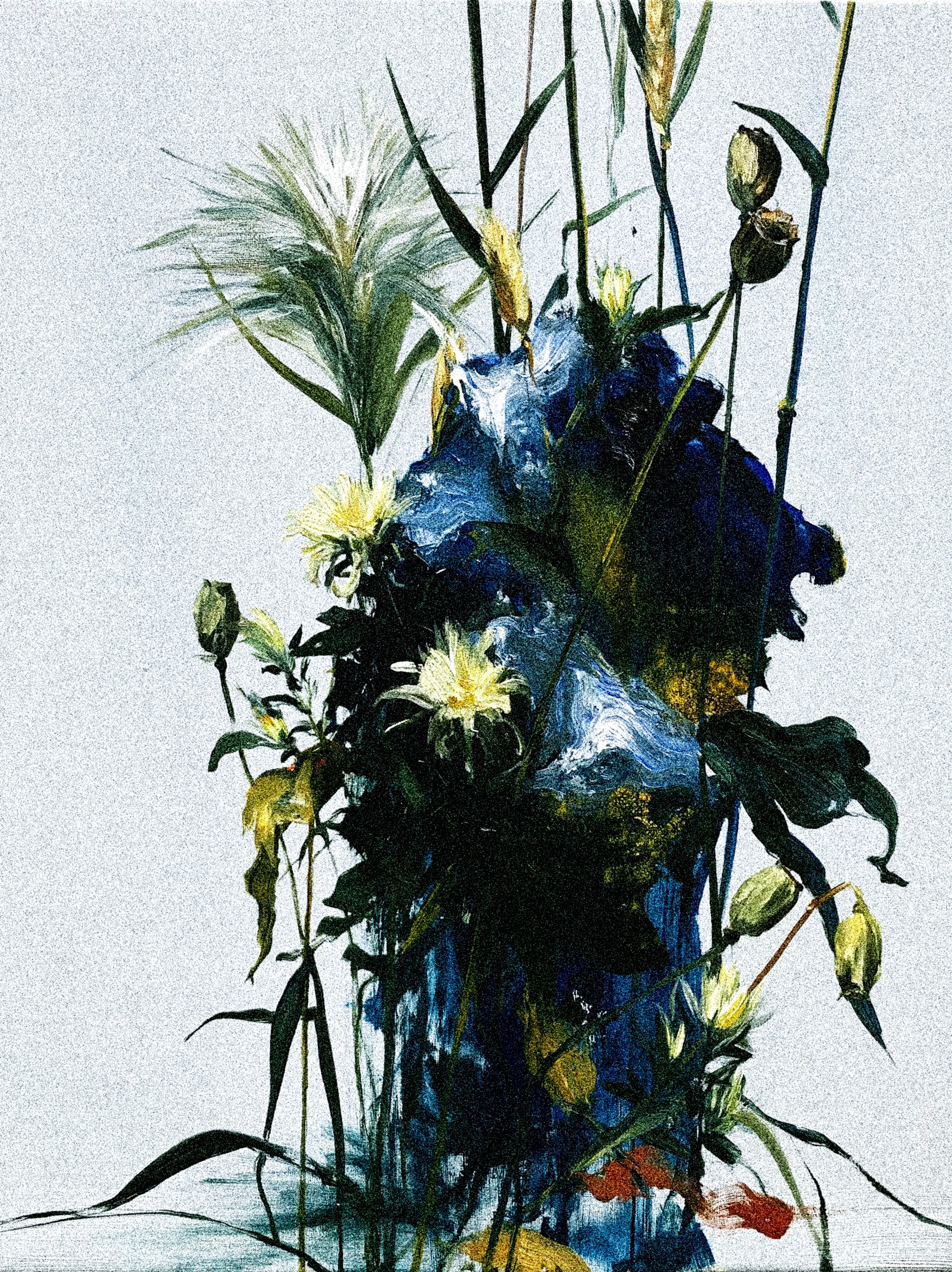
On the day of White Dew, silvergrass holds water at the tips of its hairs. Each spikelet carries a tuft of white hair under 0.05 millimetres across, waxed; the beads sit where hair crosses hair and stay. Radiative cooling drops the leaf a degree or two below the surrounding air, vapour condenses, and by mid-morning it is gone — each gram of water carrying off 2,400 joules as it leaves.
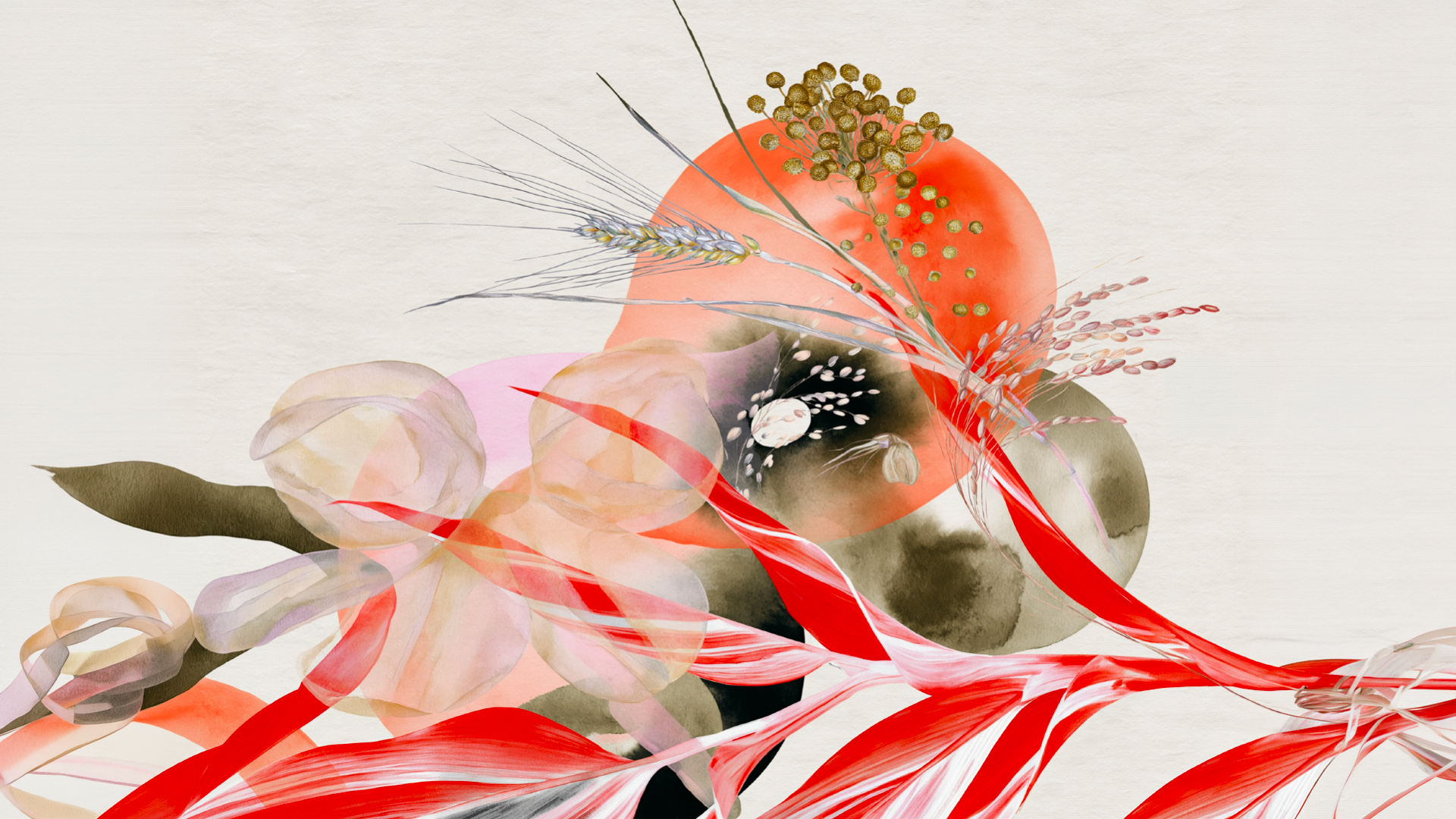
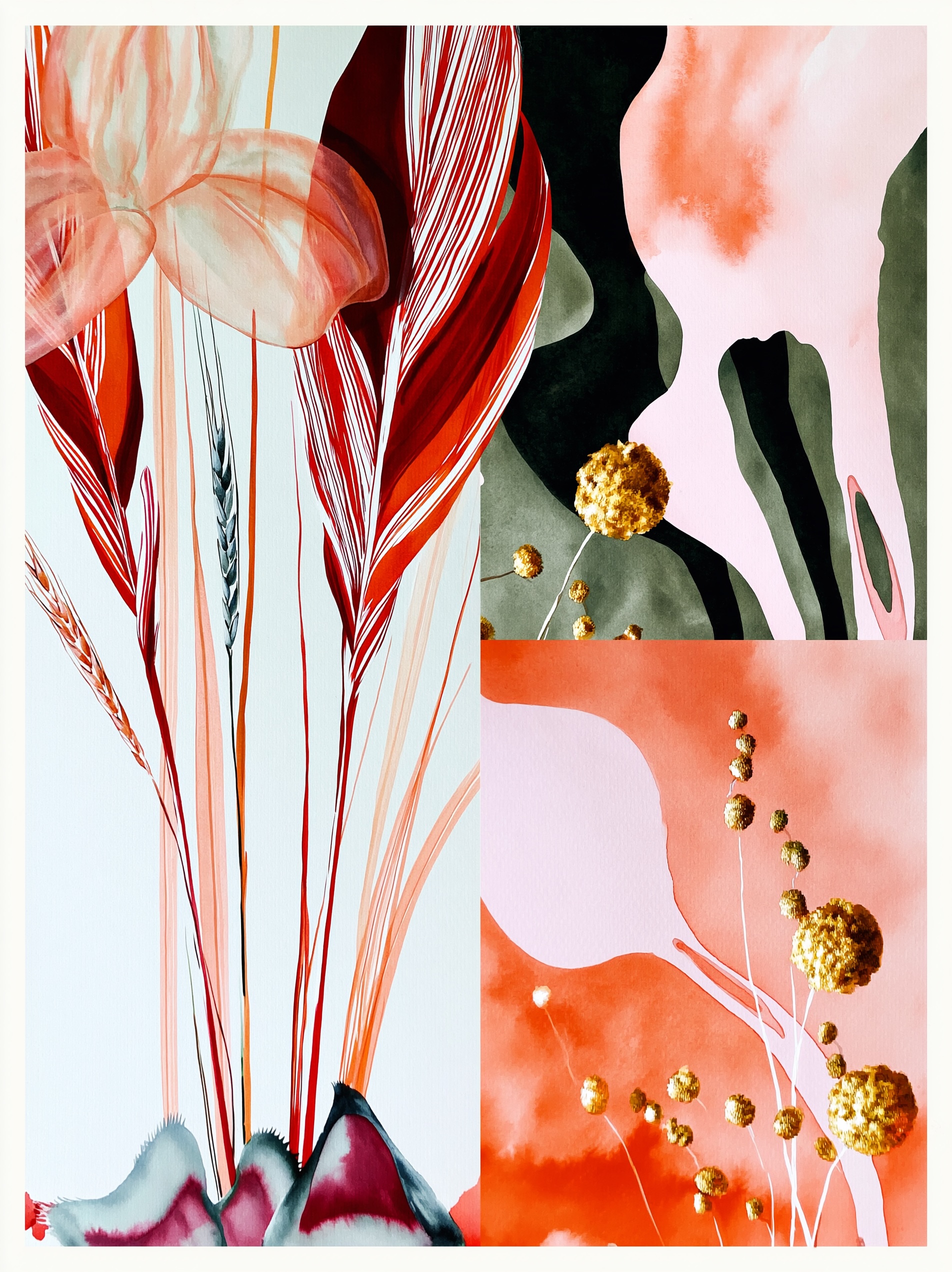
The green separates into two layers. New leaf above, full of water, edges straight. Moss-dark below, laid on thick, covering where the stems cross.
That autumn there was a wide-mouthed jar on the living room table: silvergrass from the far end of the market, a few chrysanthemums, two stems with seed pods attached. The water dropped two centimetres a day, half into the stems, half into the air. Someone topped it up each morning to three fingers below the neck. The same height. Never measured.
At the Autumn Equinox the sun stands over the equator. Textbooks say day and night are equal; in Taipei the daylight runs nine minutes longer, because refraction lifts the sun's image half a degree and sunrise is timed from the upper edge of the disc. True equality falls three days later. At latitude 25, the noon shadow measures 0.47 times the height of the pole.
The awns harden. An awn is a filament drawn out from the glume, barbed toward the tip; on the ground, shifts in humidity work the barbs and drive the grain into the soil. The structure exists for sowing, not defence. The pods swell, husks still green, a gap between husk and kernel, a sound when shaken.
Blue presses down from above. Not sky — cobalt dried on paper, covering a length of stem, letting some green through.
Around Cold Dew the first northeast monsoon reaches northern Taiwan. The nights turn damp. Dew comes close to freezing without freezing. The chrysanthemums open in this window: sugar rises in the cell sap of the petals, the freezing point falls to one or two below zero, and that is the condition under which they open here. The plant does not fight the cold. It changes the liquid inside itself.
Yellow arrives, low in saturation, close to dry straw. The outer florets turn back one at a time. The centre stays closed.
Frost's Descent. Frost is not frozen dew: vapour on a surface below zero skips the liquid state and forms ice crystals — deposition — the crystals lining the serrations of the leaf edge in one night. No frost falls on the Taipei plain. The heat island holds the city two to three degrees above the outskirts, and the first-frost line sits above a thousand metres. The name, in this room, is borrowed.
The silvergrass hairs come loose onto the table. Swept once, there again the next day. The petals close into brown, the pods fade from green to grey.
The vermilion at the base of the jar is paint spilled last year. It does not come off. Someone tops the water up to three fingers below the neck.